Magical diving destinations
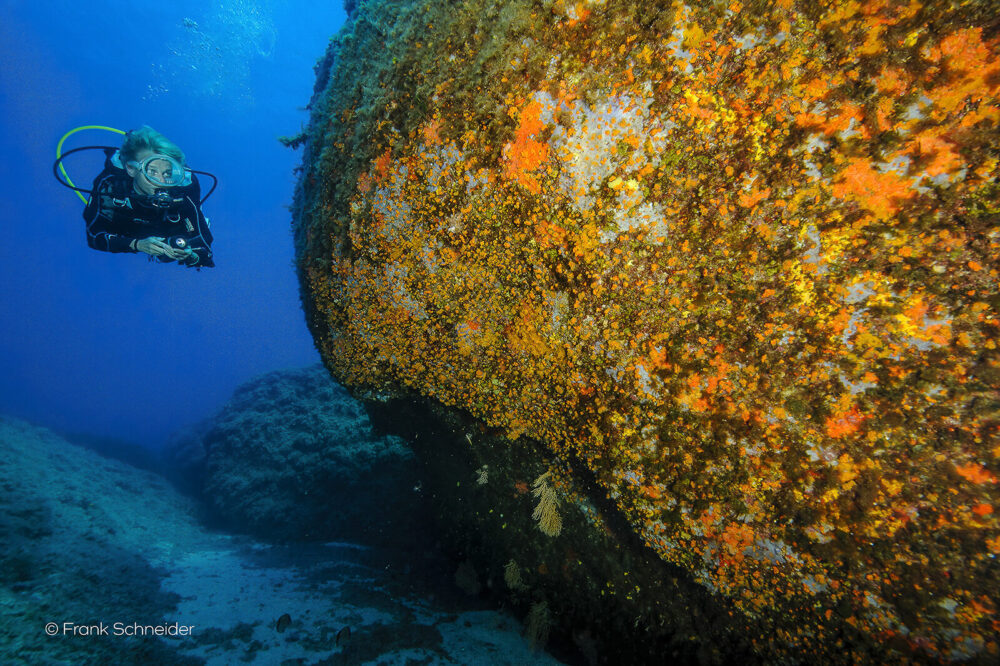
The underwater world awaits!
The underwater world awaits!
Magical diving destinations at boot 2027-Our Blue Planet has earned this nickname for good reason – after all, more than 70 per cent of the Earth’s surface is covered by water. Fellow diving enthusiasts will no doubt now have images of the world’s diverse destinations springing to mind. There are opportunities for fantastic underwater adventures in all the varied forms this leisure activity has to offer. Whether it’s the numerous diving destinations in the Mediterranean or remote tropical coral reefs: those who wish to can also find destinations in the northern seas at boot. The fact is: the world is (almost) open to divers: at boot Düsseldorf 2027, divers will find many diving tour operators and diving schools from every continent in Hall 13.
Europe
The Mediterranean ranks right at the top in terms of biodiversity: with more than 17,000 different species living in Europe’s ‘backyard sea’, it is surpassed only by the Coral Triangle in the western Pacific. Even if the European species aren’t all waiting behind one of the adventurous rocky reefs or swimming together across one of the graceful seagrass meadows at the same time, every dive in the Mediterranean is an impressive experience.
A huge advantage – and this isn’t just known to visitors to the CARAVAN SALON in Düsseldorf – is that many Mediterranean diving destinations, such as Spain’s Costa Brava or Croatia, are easily accessible by motorhome or car with a caravan. The major islands and archipelagos – such as the Balearic Islands, Corsica, Malta, Sardinia, Sicily and Cyprus – as well as Turkey and the Greek islands, can be reached quickly and easily by plane. The same applies to Madeira in Portugal and the Canary Islands. Diving enthusiasts can therefore enjoy a wonderfully personalized experience across Europe.
The classic Mediterranean diving destination is surely a given: the Spanish Costa Brava has been a staple for many diving enthusiasts since the early days of the sport. From the French border to just before Barcelona, there are also almost as many fantastic dive sites with nearby hotels, campsites and motorhome pitches. Around Rosas, Cap de Creus, Cala Joncols and the Medes Islands lie some stunning dive sites. Also highly popular with fans of Spain is Mallorca; here, the abundance of fish and numerous caves appeal to both beginners and experienced divers alike.
For those travelling from countries north of the Alps, however, the diving destinations along the coasts of the Ligurian Sea offer one of the shortest journeys. Between La Spezia and Genoa, the Italian marine protected area off Portofino stands out. Finally, the islands of Tuscany are highly regarded by divers. Among these Italian gems, Elba and the even more tranquil Giglio are very popular. Both are home to long-established diving schools. Here, too, many reefs – thanks to yellow and red gorgonians, which belong to the horn coral family – glow in fiery, vibrant colors in the light of the underwater torches. They are thus bit as good as many tropical reefs. Barracudas in large shoals, as well as some truly large, burly-looking groupers, make a striking impression whenever encountered almost anywhere in the Mediterranean.
On the eastern side of the Italian ‘boot’, the diving sites of Croatia await on the opposite Adriatic coast. They are also easily accessible for divers with their own transport. In recent years, more and more stretches of coastline and islands have been designated as underwater nature reserves. The teeming reefs and abundance of fish therefore ensure a thrilling experience on every dive.
This also applies to the island of Sardinia. There, the areas in the northern third have long enjoyed a reputation as being among Europe’s top diving destinations. The shores off the coast of Palau di Gallura, not far from Capo d’Orso, with their proximity to the Maddalena Archipelago, are (still?) an insider’s tip for divers north of the Alps. To the east, near Alghero, the reefs and small caves around Capo Caccia also offer epic underwater adventures. Along the coast around Santa Teresa di Gallura – home to the ferry port for Corsica – lies the third top diving spot in the north of the Mediterranean’s second-largest island. Anyone travelling there by plane rather than by car – for example, by ferry from Genoa – should hire a car. Incidentally, some dive centres in the very north of Sardinia also organize day trips to the Lavezzi Islands, which belong to Corsica. The curious giant groupers there have been legendary for decades. Naturally, there are also numerous dive centers on the French island where Emperor Napoleon was born.
When it comes to Italy’s top diving destinations, Sicily is a must. Trapani, in the north-west, is the starting point for trips to some truly legendary spots. Off the coast, the Aegadian Islands also offer some of the best diving regions around Sicily. The same applies to the small island of Ustica, around 55 kilometers north of Palermo. Mass tourism is completely unknown here too.
The EU member state of Malta, comprising the main island of the same name and the neighbouring islands of Gozo and the uninhabited Comino, has been a fixture among European diving destinations for decades. Particularly popular, alongside the shipwrecks sunk for divers, are the numerous underwater caves offering varying levels of difficulty. On the coast of Gozo, the Blue Dome (also known as the Blue Hole of Gozo) enjoys a legendary reputation worldwide and is also a fantastic spot for photography. Best of all, the site is also suitable for divers with a little less experience, as the surface always remains in sight.
The Turkish Mediterranean region is not yet a common entry in many divers’ logbooks. Yet there are a whole host of attractive destinations there. These include Ayvalık, which is still relatively unknown in this part of the world. This charming town, which also includes the island of Cunda, is occasionally referred to as ‘the Turkish Saint-Tropez’. The underwater world here offers something special: whilst red precious corals in the Mediterranean usually thrive at greater depths, off Ayvalık they can also be found in areas easily accessible to recreational divers. The Ayvalık Islands Nature Park marine reserve ensures that the beauty of these underwater worlds is preserved.
Another diving destination is Adrasan – here, with a bit of luck, divers may encounter a monk seal and see ancient relics such as stone sarcophagi. Between these two areas, underwater adventures also await off the coast of Bodrum, featuring an amphora field, simple cave dives and descents to the Marmaris wreck. The Antalya region on Turkey’s south coast is also well worth mentioning. As well as a First World War wreck at a depth of around 25 meters, marine life such as small schools of bream, barracudas, moray eels and groupers are among the underwater attractions. Unique to the Mediterranean: in the Gallipoli Historical Underwater Park, 23 wrecks dating back more than 110 years are waiting to be explored by divers.
Often unfairly underestimated as a diving destination: Cyprus, the easternmost island in the Mediterranean. On the south coast, at the edge of Larnaca Bay, lies one of the undisputedly best wreck diving sites in the Mediterranean: the ‘Zenobia’, a 172-metre-long ferry built in Sweden, which sank there in 1980 during its maiden voyage. With depths ranging from 18 to 42 meters, it is suitable for divers of all experience levels. Fishing is prohibited within three miles of the wreck, so divers can expect to see a wealth of marine life there. On the island’s south coast, there are more than 30 other designated dive sites – so boredom is (also) unheard of here, even underwater.
Among Europe’s top diving destinations are, not least, the Spanish Canary Islands in the eastern Atlantic and the Portuguese island of Madeira. Both destinations impress, amongst other things, with numerous large fish in their diving areas. Madeira has created the Garajau Marine Protected Area, where divers can encounter manta rays, giant groupers and, with a bit of luck, even monk seals. If, on the other hand, the Canary Islands were to choose a heraldic animal from among their marine life, it would probably be the angel shark. This generally harmless species can usually be observed at close quarters in the reefs formed by ancient lava right off the coast.
Africa
For more than 50 years, the Egyptian reefs in the Red Sea have been a mainstay of the diving world. Thanks to its political stability and generally very good security situation, the country has for decades become one of the most popular destinations for divers too. First-hand information on this is available from the Egyptian Tourism Authority, as well as from numerous international dive centers and tour operators in Diving Hall 13.
The coral reefs around the Sinai Peninsula are the tropical diving destination closest to Europe. In this context, scientists from the Swiss university École Polytechnique Fédérale de Lausanne (EPFL) have found that the corals in the Red Sea possess a natural tolerance to heat. As a result, the range of diving experiences off Egypt’s east coast and in the Gulf of Aqaba remains immense. From hotels with house reefs right on the beach to multi-day diving cruises to the dream reefs at the very southern tip of Egypt’s Red Sea coast, there is something to suit almost every taste. Off the coast of Hurghada, it is well worth visiting the numerous shipwrecks, such as the ‘Thistlegorm’ or the ‘Giannis D’. Even simple dive sites such as Shaab El Erg – better known as Dolphin House – with the prospect of encounters with marine mammals, remain appealing. The offshore dive sites, such as those at the Brother Islands, Daedalus Reef and Elphinstone Reef, have achieved legendary status. Even more remote – and thus largely untouched – are St John’s Reef, Elba Reef and the Fury Shoals, just short of the border with Sudan.
The island nation of Mauritius is also considered part of the African continent. The country is regarded as one of the most peaceful in the world. Despite a history shaped almost exclusively by immigration, residents of different faiths live together peacefully here. Some of the best dive sites are located in the north, off the village of Pereybére. There, easily accessible wrecks and small reefs impress with a rich variety of marine life, both large and small.
Asia
The Maldives to the west and Indonesia and the Philippines to the east: the Indian Ocean is one of the most diverse seas for diving adventures. There are countless flight connections from Europe; these can usually be easily tailored to individual needs when booking a trip, so that personal safety concerns can be accommodated without any hassle.
There are almost 200 dive centers across the 26 atolls of the Maldives. Those closest to Male Airport are located in the north of South Male Atoll and in North Male Atoll. The most remote are in the south, on the islands of Gan and Canareef. Anyone wishing to dive in the largely unspoilt north should take a domestic flight on to Hanimadhoo. From there, it is only a short boat ride to one of the just four centers in this region. At boot 2027, many diving tour operators will be providing information on destinations on the other atolls as well.
If we continue our (diving) exploration eastwards, the Andaman Sea and Thailand soon come into view. There are plenty of diving centers on the islands of Phuket and Koh Lanta, as well as in Khao Lak. Those who prefer dives with short travel times will find what they’re looking for on the islands, though longer liveaboard trips are also available here. The famous Similan Islands can be reached from Khao Lak on full-day trips. Thailand is renowned for its colorful reefs and encounters with large fish, such as manta rays and leopard sharks. Graceful and tiny: harlequin shrimp and the pretty ghost pipefish.
The world’s largest archipelago is Indonesia. When considering diving destinations there, divers often think first of the Raja Ampat Archipelago. Undoubtedly, Wakatobi National Park – a UNESCO Biosphere Reserve – is also one of the most interesting diving areas on our ‘Blue Planet’. In addition, there are a multitude of other fantastic diving areas. These include not only Bali but also the Moluccas. Generally speaking, Indonesia’s waters are renowned for their impressive biodiversity. Detailed information on this can be found at the Indonesian Joint Pavilion in Hall 13.
When it’s said – as is the case with the Philippines in South-East Asia – that there are ‘more than 7,000 islands’, most divers are bound to prick up their ears. Countless species inhabit the seas there, ranging from the world’s largest fish – the harmless whale shark – to tiny species of nudibranchs in an enchanting array of colors. At many dive sites, enormous turtles and dense schools of fish can be observed. In 2027, too, the large Philippines stand in Hall 13 will offer extensive information and special offers.
Micronesia – hardly any other region with diving destinations still sounds as mysterious today as this island archipelago in the Western Pacific. This aura has persisted (and rightly so!) for many years, even though dive centers from Palau and Yap have been present at boot Düsseldorf for decades and have numerous regular customers amongst divers.
In the case of Palau, this is certainly down to spots such as the world-famous current channels with their colorful coral growth. These include the Blue Hole, where reef sharks regularly gather. Shipwrecks and aircraft wrecks round off the array of fantastic dive sites, and then there’s also the legendary Jellyfish Lake. Surrounded by tropical forest, you can snorkel there safely amongst these harmless creatures. For those who can’t get enough of diving in Palau’s waters, a liveaboard cruise solves this problem too! Spectacular photos of the archipelago and the Jellyfish Lake can also be taken on a scenic flight.
No less exotic: not far from the Mariana Trench, on the edge of the 8,527-metre-deep Yap Trench, lies Yap Island. Since 1990, it has been home to the island’s only dive hotel: the Manta Ray Bay Resort, run by Bill Acker, a Texan of German descent. He had already founded the Yap Divers base on the island back in 1986. The hotel’s name says it all: the giant manta rays can be observed at close quarters all year round, even at cleaning stations in the shallow lagoon. Other large marine creatures such as sharks, Napoleon fish and sea turtles swim through the current channels. Yap’s extensive, intact stony coral fields on the outer reefs are particularly remarkable. Incidentally, Yap is the island home to the world-famous, oversized stone money, which stands in the jungle and is still used today to pay for property. Even if the marine life is unlikely to care, a trip to this unique site is definitely worth it for divers between their underwater adventures in the sea.
In its global overview of diving regions, *boot* magazine cannot leave out the Caribbean. European divers are particularly fond of the Dutch-influenced ABC Islands. Whilst Curaçao’s capital, Willemstad, is a slice of ‘Old Europe’ in terms of history and style, the dive sites are typically Caribbean, featuring mostly gently sloping reefs. The characteristic fan corals and large tube sponges thrive there. The island is ideal for anyone who likes to access dive sites directly from the shore. Most of the roughly 70 entry points – depending on how you count them – are situated on the south/south-west side, which is sheltered from wind and waves. Those who prefer boat dives will also find several dive centers catering to this.
Bonaire, which is considerably smaller, is – unlike Curaçao – a direct part of the Kingdom of the Netherlands. It is even slightly more geared towards divers. Here too, as in most of the southern Caribbean, the reef landscapes are characterized by fan corals and other corals, as well as sponges. Naturally, a vast array of fish also lives here: established in 1979, Bonaire’s marine reserve is one of the oldest in the world.
Finally, the Bahamas should not be overlooked. After all, a certain James Bond once experienced underwater adventures off Nassau on the island of New Providence. To the west of the island lies the Tongue of the Ocean deep-sea trench. Here, on the plateau off the island, large fish such as sharks, rays and Nassau groupers can be spotted, whilst large sponges and corals make a striking impression on the steep walls.
For this and all other destinations, many diving tour operators in Hall 13 at boot 2027 will be on hand to offer tips and detailed information. In short: your next diving holiday begins as early as January in Düsseldorf on the Rhine. An overview of all exhibitors in Hall 13 will be available from the end of October in the database at www.boot.com.