13th Monaco Energy Boat Challenge
Monaco
13th Monaco Energy Boat Challenge 8-11 July 2026
43 teams from 21 nations as the world’s elite in naval engineering mobilise to accelerate the energy transition
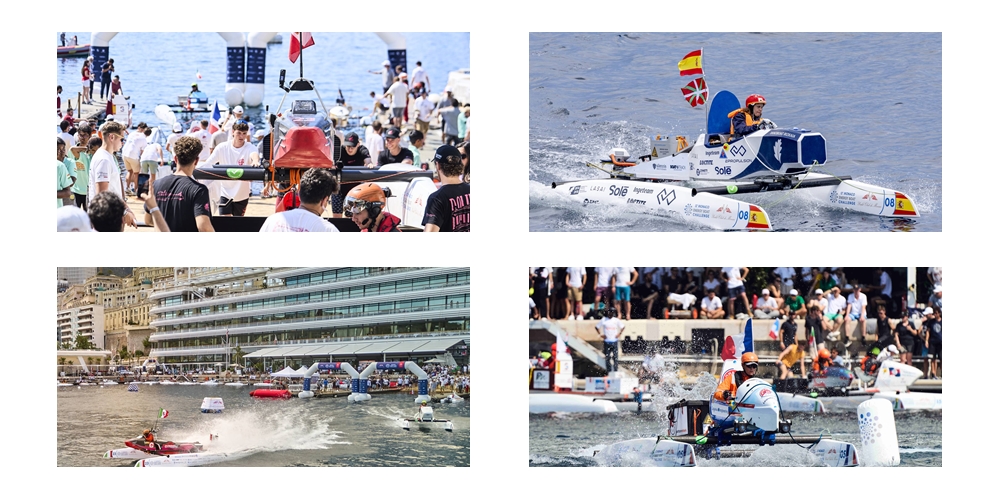
13th Monaco Energy Boat Challenge-Yacht Club de Monaco is organising the 13th Monaco Energy Boat Challenge, supported by the Prince Albert II of Monaco Foundation, UBS, BMW and SBM Offshore. An outdoor laboratory of innovation that remains focused on sustainable propulsion technologies, the 2026 edition gathers 43 teams representing 21 nationalities from Europe, North America, the Middle East and Africa, all working towards a common goal to speed up the energy transition in yachting.
Students, universities, technical colleges and industry professionals will descend on the Principality to present their solutions and test their prototypes in a unique environment that promotes collective intelligence.
“This event is a platform for exchange and knowledge sharing. By bringing together hundreds of young engineers, we are reaffirming yet again our commitment to making Monaco a testing ground where students, manufacturers and institutions can work together on sustainable solutions for the boats of tomorrow,” says Bernard d’Alessandri, Yacht Club de Monaco’s Director and General Secretary. “The diversity of profiles and cultures is a key asset to stimulate innovation and accelerate the maritime sector’s energy transition that drives our collective ‘Monaco, Capital of Advanced Yachting’ approach”.
International participation constantly evolving
The fact over 1,000 students and young engineers are involved in the Challenge year-round is testimony to its global appeal. For many teams, the event is a pivotal step on their career path as being at the crossroads of education, applied research and integration into the maritime sector workplace. Many teams also have several years of development behind them, their solutions now being at an advanced stage of optimisation and maturity.
The progress that has been made is reflected in increasingly sophisticated projects that include predictive energy management (HydroVinci, France), high-speed at high efficiency propulsion (Hydros Team, Indonesia), digital twins (Cambridge University Riviera Racing, UK) and bio-sourced materials (Team Sea Sakthi, India).
Technological maturity on the rise
Technological approaches reflect this evolution with more focus on eco-design, hydrogen-electric hybridization and smart energy management. Solutions are being designed not just for performance but also their industry application potential.
Of the prototypes registered:
- 33 feature battery-electric systems
- 9 incorporate hydrogen technologies
- 1 uses methanol
- 9 are employing foils
Their choices reflect a shared goal to reconcile performance, energy efficiency and a reduced environmental impact.
Four categories to explore yachting’s future
Teams are divided into four categories:
- AI Class (11 teams): driving artificial intelligence for boats
Introduced in 2025, the AI Class is proving a driving force for the Monaco Energy Boat Challenge with 11 teams registered. They confirm a fundamental change with the growing integration of artificial intelligence in boat design, navigation aids and energy management optimisation. Projects have to focus on full autonomy combining sensors, advanced algorithms and onboard decision-making systems that can assist piloting and manoeuvring at sea in real-world conditions. AGH Solar Boat (Poland)for example has onboard computers running neural networks so the boat can map the environment, detect obstacles and plan its trajectory. UGent Sailing (Belgium) stands out with a notably advanced approach based on an AI-driven autonomous system. Indeed, this event is an opportunity for students to put their machine learning research and cutting edge control techniques into practice on the sea.
- Energy Class (26 teams): a testing ground for electric and hybrid technologies
A long-time pillar of the event, the Energy Class has attracted 26 teams, all working on the same standardised hull supplied by YCM, levelling the playing field to enable more direct comparisons between different solutions and energy management performance in identical conditions. This category focuses on projects that have attained a high level of maturity, and are judged more on how the architectures and systems have been optimised rather than just a simple demonstration of technology. Hence, HydroGadz (France) continues to work on counter-rotating propellors to improve propulsion efficiency while reducing hydrodynamic losses. Also of note is the Exocet Polytechnique Montreal entrant for how the team has modernised its hydrogen system, carried out with the Hydrogen Research Institute, illustrating an uptick in maturity and safety of the solutions being explored. Meanwhile, the Spanish team InnoBoat Bizkaia has opted for an approach that combines AI and environmental data. Its route planning system uses real-time data from Copernicus Marine to optimise trajectories based on currents, while an AI-powered conversational assistant guides the pilot in their energy and operational decisions.
- SeaLab Class (6 teams): floating laboratories testing emerging energy sources
Introduced to create space for advanced experimentation, the six teams in the SeaLab Class explore technologies that are still relatively uncommon in the maritime sector. These prototypes are true floating laboratories testing new energy architectures in real-world conditions paving the way for alternative solutions, like the methanol-powered prototype from Solar Boat Twente (Netherlands). The goal is to explore alternatives to electric and hydrogen systems, opening new avenues for reflection on the role of transition fuels in the decarbonization of maritime transport.
- Open Sea Class: the zero-emission industry’s showcase
Open to CE-certified zero-emission boats ready to roll, the open Sea Class – for which registration is open until mid-May – gives brands a prime opportunity to present their most advanced vessels. A showcase of industry excellence, the presence of this class of innovative, fully operational models is an opportunity for the public to see firsthand what the future of pleasure boats will look like.
A unique meeting place for students and the industry
As well as the contests at sea, the Monaco Energy Boat Challenge encourages exchanges between talented young people and professionals working in the maritime sector. Along with the Corporate Mentoring Programme when key players in the industry support teams throughout the year, Tech Talks and the Job Forum will again cement bridges between training, research and industry. Contestants are also assessed on their technical presentations in open source and exchanges with an international jury, all conceived to share knowledge. As every year, the Monaco Energy Boat Challenge stands out as an event that is about sport, technology and education focused on developing solutions for sustainable navigation in the future.